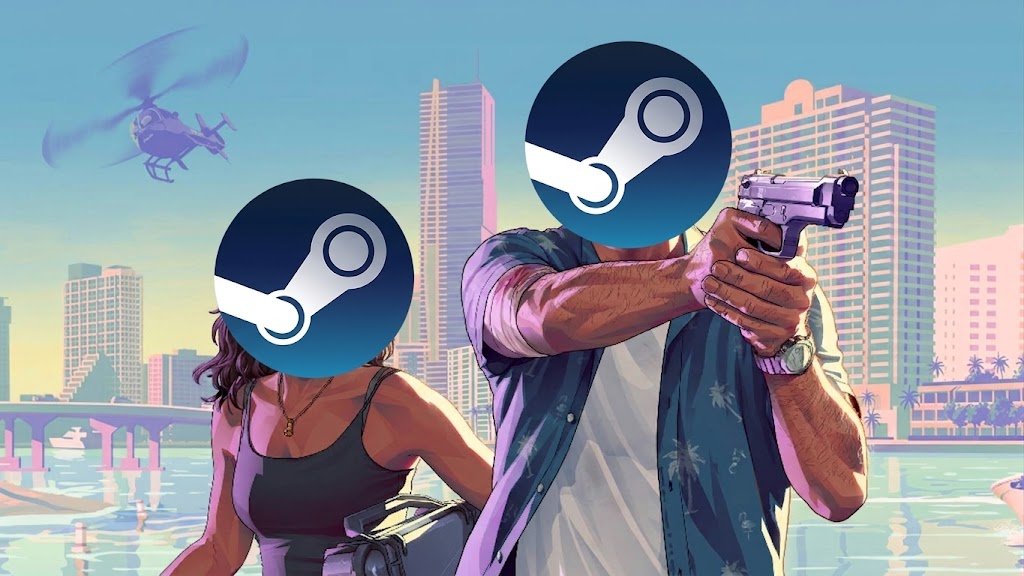
GTA 6 PC Release: Why the Port Could Arrive Much Earlier Than Expected
While GTA 6 launches on consoles this November, industry rumors and hardware similarities suggest the PC version could arrive much faster than previous Rockstar titles.

Grand Theft Auto VI is undeniably the most anticipated video game in modern entertainment history. With the game officially set to launch on November 19 for the PlayStation 5 and Xbox Series X|S, millions of console players are already preparing to explore the massive, sun-drenched streets of Vice City. However, for a massive segment of the gaming community, a lingering question remains: when will the game arrive on personal computers? Rockstar Games has yet to share an official date for the PC version, leaving many to assume the worst.
Historically, Rockstar Games has treated the PC platform as a secondary priority during a game’s initial launch window. Grand Theft Auto V originally launched on the PS3 and Xbox 360 in 2013, but PC players had to wait nearly two full years until April 2015 to get their hands on it. Similarly, Red Dead Redemption 2 launched on consoles in October 2018, with the PC port following a little over a year later in November 2019. Because of this established track record, the community largely expected a similar, agonizingly long delay for the latest entry in the franchise. However, recent industry evaluations and insider murmurs suggest that the waiting period for the GTA 6 PC release could be significantly shorter this time around.
The Industry Rumors Hinting at a Shorter Wait
The possibility of an accelerated timeline recently gained traction thanks to insights from industry professionals. Andy Robinson from VGC recently noted that he has heard whispers within the gaming sector suggesting that the PC version of Grand Theft Auto VI might arrive much earlier than the community anticipates. According to Robinson, Rockstar is actively considering streamlining the PC porting process, aiming for a faster turnaround compared to their previous massive open-world titles.
It is crucial to note that, as of right now, these conversations remain strictly in the realm of rumors and industry speculation. Rockstar Games has not officially confirmed a PC release date, and the studio is notoriously secretive about its internal development pipelines. Nevertheless, when looking at the current state of the gaming market and modern hardware ecosystems, accelerating the PC launch makes a tremendous amount of logical and financial sense for Take-Two Interactive.
One of the primary driving factors behind this potential shift is the reality of console hardware availability. When GTA 6 launches this November, the demand for current-generation consoles—specifically the PlayStation 5 and the rumored PlayStation 5 Pro—is expected to skyrocket to unprecedented levels. Industry analysts predict that this massive surge in demand could easily lead to severe hardware shortages in various global regions. If a significant portion of the player base simply cannot purchase a console due to stock limitations, Rockstar would be leaving a massive amount of money on the table. In such a scenario, pushing the PC version out the door earlier would be a highly strategic move, ensuring the game reaches the widest possible audience without being bottlenecked by Sony or Microsoft’s manufacturing limits.
How Modern Architecture Eases the Porting Process
Beyond market dynamics and console shortages, the technical landscape has shifted dramatically in favor of PC development. In previous console generations, porting a massive game was a monumental engineering challenge. The PlayStation 3, for example, utilized the notoriously complex Cell processor, which was vastly different from standard PC architecture. Porting a game from that environment to Windows required practically rebuilding core engine functions from the ground up.
Today, the technical divide is narrower than ever before. Modern consoles, including the PlayStation 5 and Xbox Series X|S, utilize x86 architecture, making them remarkably similar to standard gaming PCs. This architectural parity does not mean that porting a game is as simple as flipping a switch, but it heavily streamlines the development process. It removes many of the foundational engineering hurdles that historically delayed PC releases. Of course, bringing a game as incredibly dense and visually advanced as GTA 6 to a platform with thousands of different hardware configurations will still require a rigorous optimization period. Rockstar will need time to ensure the game runs smoothly on a variety of graphics cards and processors, but the foundational translation of the code is inherently easier today than it was a decade ago.
For the PC gaming community, the expectations for this eventual port are sky-high, particularly regarding technical performance. While the PlayStation 5 and Xbox Series X are powerful machines, it is widely expected that GTA 6 will target a baseline of 30 frames per second at a 4K resolution on consoles to maintain its staggering visual fidelity and complex crowd simulations. PC players, on the other hand, will expect fully unlocked framerates, ultrawide monitor support, and the ability to utilize upscaling technologies like NVIDIA DLSS and AMD FSR to push the game well beyond 60 FPS.
For now, the only absolute certainty is that Vice City will be a console-exclusive destination at launch. However, if these recent industry whispers hold true, the PC community might finally break the cycle of waiting years to experience Rockstar’s genre-defining open worlds.
New market data reveals that Steam has generated over $15 billion in gross revenue during the first eight months of 2026, already surpassing its total earnings for 2023. Propelled by major new releases and strong back-catalog sales, the platform is currently on track to shatter records and cross the $20 billion milestone by the end of the year.