
Steam Achievement Sets Enter Beta: A New Way to Track Game Progress
Steam Achievement Sets are entering beta, introducing grouped achievements, DLC progress tracking, completion trophies, and an improved achievement page.
Steam is introducing a new feature designed to improve how players track their progress and collect achievements. Called Steam Achievement Sets, the feature is now available through the Steam beta client for supported games, giving developers new ways to organize achievements and making it easier for players to see what they have accomplished.
Modern games frequently receive updates long after their initial release. Expansions, downloadable content (DLC), seasonal updates, and other additions can keep a game active for years. However, these updates can also create problems for achievement hunters. Newly added achievements may be difficult to discover, and players who have already completed a game can suddenly find that their progress no longer reflects a full completion.
Steam Achievement Sets aim to address these issues by allowing developers to organize achievements into separate collections. The system also introduces dedicated progress tracking, completion trophies, and improved tools for comparing achievements with friends.
What Are Steam Achievement Sets?
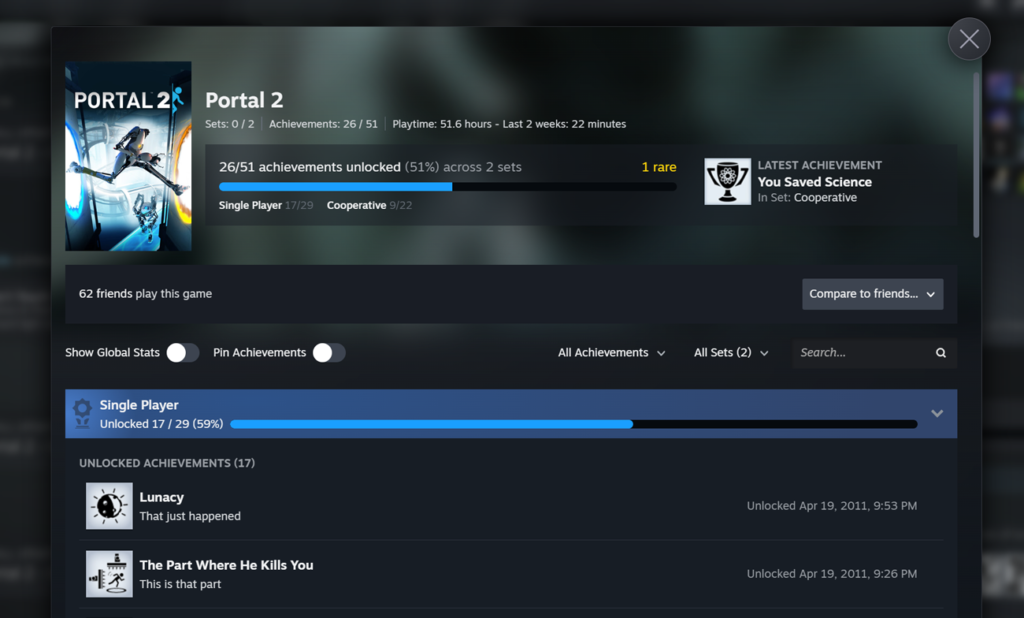
Steam Achievement Sets allow developers to group a game’s achievements into collections based on specific categories or gameplay experiences. The number of sets and their purposes are determined by each developer, meaning the feature can be adapted to different types of games.
For example, a game could have separate achievement sets for single-player and multiplayer content. Another title might organize achievements around eight different character classes, while a live-service game could introduce additional sets for new seasons or major content updates.
Players will continue earning achievements through normal gameplay. The difference is that supported games will display their achievements in clearly organized groups rather than presenting everything in one long list.
Each achievement set also has its own progress bar, allowing players to see how close they are to completing a particular collection. Once every achievement in a set has been unlocked, Steam awards a Set Completed trophy that appears on the player’s profile.
One of the most useful aspects of this system is that completed sets remain completed even when developers add new achievements later. This means players who have already finished a collection will not lose that accomplishment simply because a game receives additional content.
For achievement hunters, this change could make long-term completion goals much easier to manage, particularly in games that continue expanding for months or years after launch.
Main Game Sets and DLC Achievement Sets
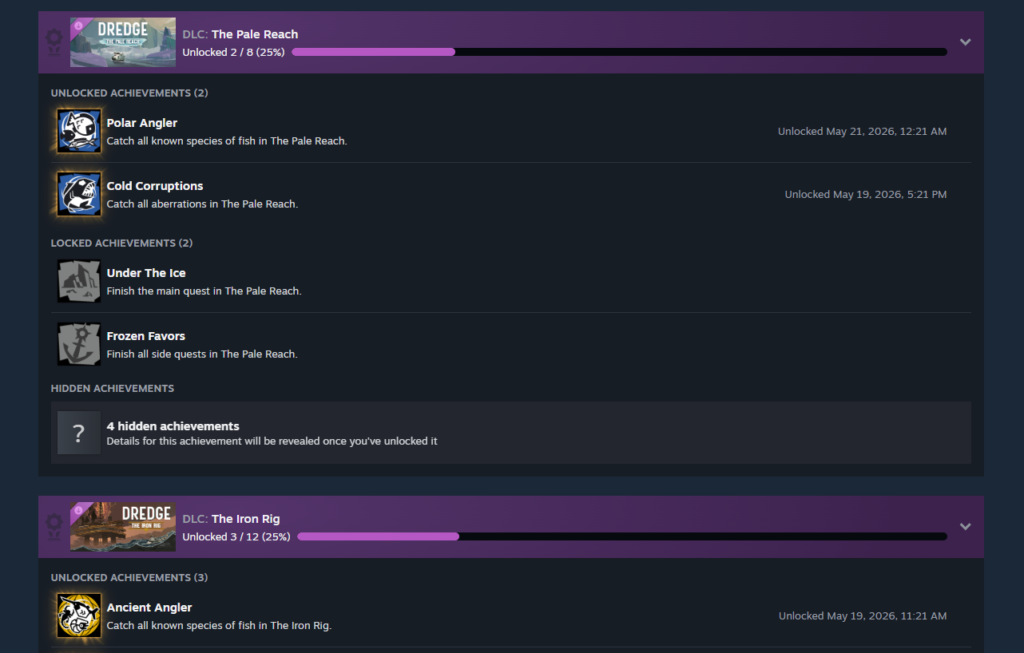
Steam Achievement Sets are divided into two main categories: main game sets and DLC sets. Each serves a different purpose, helping players distinguish between achievements available to everyone and those tied to additional content.
Main Game Achievement Sets contain achievements that can be earned by players of the base game. Their progress indicators and completion trophies appear in blue on the achievement page, making them easy to identify.
DLC Achievement Sets, meanwhile, organize achievements that require access to downloadable content. Instead of mixing these achievements into the main game’s overall progress, Steam allows players to track them separately.
DLC achievements will not count toward the relevant progress until the player has access to the required content. Once earned, these achievements and their associated progress indicators and trophies appear in purple.
The updated achievement page will also let players browse all possible achievements for a game, including those associated with DLC they have not purchased. This should make it easier to see what additional content offers before deciding whether to expand a game.
For players who enjoy completing games to 100%, this separation is particularly valuable. It provides a clearer picture of what can be accomplished with the base game and what requires an additional purchase.
Seasonal Achievements and Archived Sets
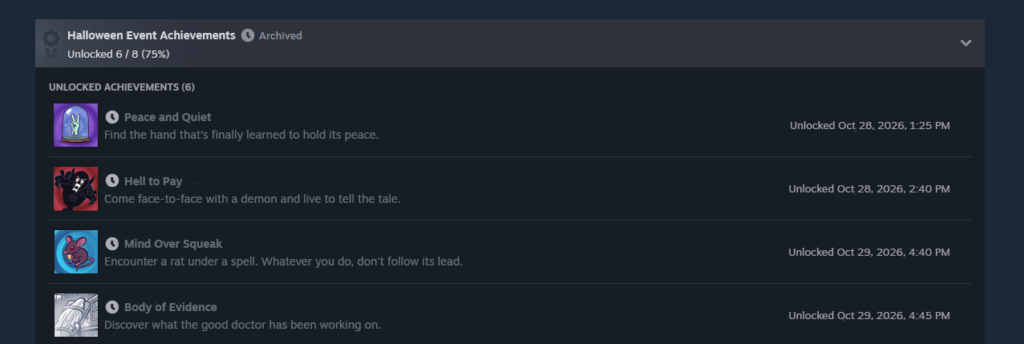
Another important part of the update is the ability for developers to archive individual achievements or entire achievement sets.
This feature could be especially useful for live-service games, seasonal content, and limited-time events. Developers may want to introduce special achievements for a holiday event, a particular season, or a temporary in-game activity without making those achievements permanently available.
Under the new system, developers can archive achievements and sets when they are no longer obtainable. Players who unlocked them before they were archived will continue to see them on their profiles.
However, archived achievements will not appear on the profiles of players who never earned them, and they will no longer affect those players’ completion progress for the relevant set or game.
This approach helps preserve achievements as records of past accomplishments without unfairly penalizing players who missed a limited-time event. It also gives developers more flexibility when designing seasonal achievement systems.
For completionists, that distinction matters. Limited-time achievements have traditionally made some games difficult or impossible to complete fully after certain events end. Archiving unavailable achievements could offer a more practical way to maintain meaningful completion tracking.
A Redesigned Achievement Page
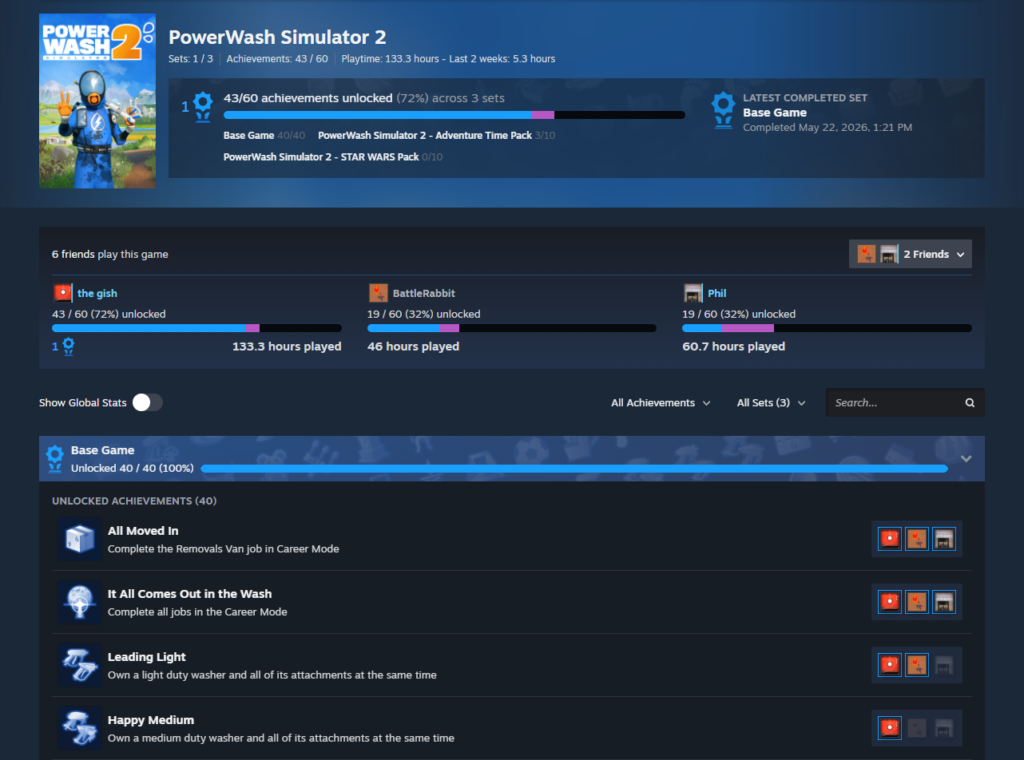
Steam is also introducing a redesigned achievement page that brings several previously separate features together in one place. Players will be able to access the page through their online game lists or directly from games in their Steam libraries.
The updated interface provides an overview of overall game progress, individual achievement sets, and the details of each achievement. Global statistics and achievement completion rates, which previously appeared on separate pages, are also being integrated into the new layout.
Search and filtering options are receiving improvements as well. Players will be able to search for specific achievement sets and filter achievements according to whether they have already been unlocked.
These additions should make it easier to identify unfinished objectives without manually scrolling through a large list. Players working toward 100% completion will have a clearer view of what remains and which collections deserve their attention.
Steam also hints at a small surprise waiting for players who complete every achievement set in a supported game, giving dedicated achievement hunters another potential goal to pursue.
Compare Your Progress With Friends
Achievement hunting is often a personal challenge, but many players also enjoy comparing their progress with friends. Steam’s new system expands these social features by allowing users to compare their achievements with up to three friends.
The comparison includes rare achievements, completed sets, and progress across DLC achievement sets. Players can also see how many sets they have completed and view a more accurate total achievement count.
Importantly, the total number of available achievements can differ between players. Ownership of downloadable content and the availability of time-limited or archived achievements can affect how many achievements a player can currently earn.
As a result, Steam’s comparison system takes these differences into account instead of assuming that every player has access to exactly the same content.
This should make comparisons fairer and more informative, especially for games with extensive DLC libraries or frequently changing achievement lists.
More Changes Across Steam
The Achievement Sets update also brings changes to several other areas of the Steam interface, making achievement progress more visible throughout the platform.
The existing Perfect Games tab is being renamed Completed Games and can be expanded to include both fully completed games and games in which players have completed achievement sets.
Games with completed achievement sets can also appear in the completionist showcase on player profiles, giving achievement hunters another way to display their accomplishments.
Steam is introducing additional improvements to game lists and family sharing. Games played through Steam Families will now appear in game lists, and users who have playtime in a game through family sharing will be able to compare their achievements with friends.
Finally, store and library pages will indicate whether a game supports Achievement Sets. This will help players identify which titles offer the new system without needing to open each game’s achievement page individually.
Steam Achievement Sets represent a meaningful improvement for players who enjoy collecting achievements and tracking their progress. By separating main game achievements from DLC, preserving completed sets after updates, and introducing support for archived achievements, Steam is addressing several longstanding frustrations associated with achievement hunting.
The redesigned achievement page and expanded comparison tools should also make it easier to follow personal goals and share accomplishments with friends.
The feature is currently available through the Steam beta client for supported games, and its usefulness will depend partly on how developers choose to implement it. Not every game will necessarily organize achievements in the same way, but the added flexibility gives developers more options for handling expansions, seasonal content, and long-term updates.
For dedicated completionists, the biggest benefit is simple: new content no longer has to undermine the progress they have already achieved. If developers embrace the system, Steam Achievement Sets could make achievement tracking more organized, transparent, and rewarding across the platform.
Source: Steam
“As Xbox continues to release key franchises on competing platforms, Microsoft is actively surveying fans on whether its major titles should return to console exclusivity. Here is what this potential shift could mean for the future of the brand.”