

Epic Games Launcher Update Faces Bugs Amid Vibecoding Debate
The new Epic Games Launcher preview is facing reports of broken buttons, freezes, visual glitches, and concerns over AI-assisted development.
Epic Games is beginning to roll out a new version of its PC launcher, but the early response has been far from encouraging. While the company is highlighting the use of vibecoding in the development process, some users testing the preview have reported a range of frustrating problems, including unresponsive buttons, misplaced icons, application freezes, and visual glitches when moving the window around the desktop.
There are also reports that the launcher automatically selects a game installation location without asking users where they want to install their games. For a platform used to manage large game libraries and downloads, even seemingly minor interface problems can quickly become irritating.
The situation has sparked a broader discussion about the role of artificial intelligence in software development. Although AI-assisted coding can help developers build and modify applications more quickly, the reported issues have raised questions about testing, quality control, and whether new development methods are being adopted too aggressively.
Epic Games Launcher Preview Reportedly Has Several Problems
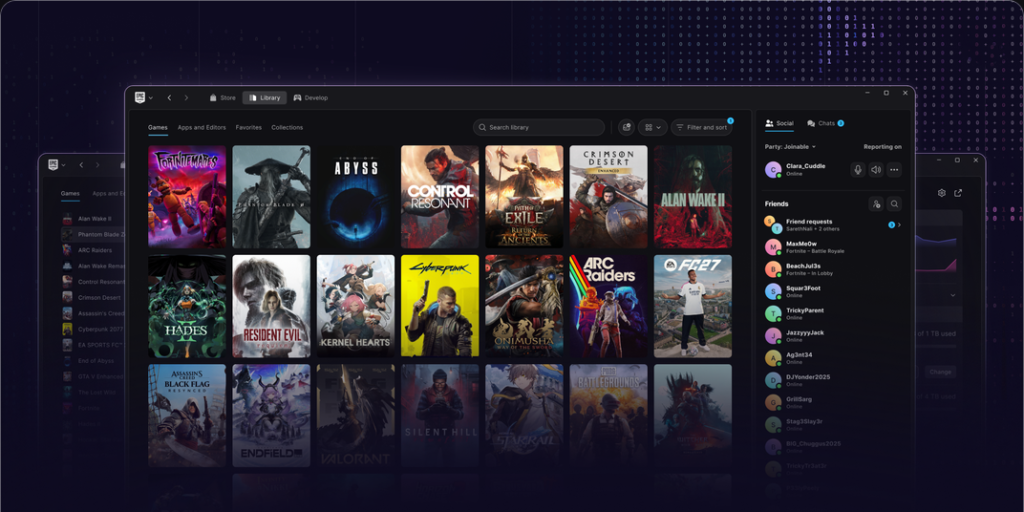
The most common complaints about the new Epic Games Launcher preview concern its interface and everyday usability. According to reports shared by users testing the updated application, some buttons fail to respond as expected, icons appear in the wrong places, and the launcher occasionally freezes entirely.
Another reported issue involves visual artifacts that appear when users move the application window across the desktop. Instead of displaying a clean, consistent interface, the window can reportedly leave behind distorted or lingering visual elements.
Individually, these problems might sound relatively minor. However, when several interface issues appear in the same software update, they can make the overall experience feel unfinished. A launcher should provide a reliable way to access games, manage downloads, and browse a digital storefront without forcing users to work around basic technical problems.
The reported installation-location behavior could also prove frustrating. Some users claim that the preview automatically chooses where a game will be installed rather than asking them to select a destination. This matters particularly to PC gamers who maintain multiple drives, use dedicated storage for large games, or need to manage limited SSD space.
It is worth remembering that these reports concern the preview version. They do not necessarily mean every user will encounter the same problems, and the behavior could change before a wider release.
What Is Vibecoding, and Why Is It Causing Controversy?
Much of the discussion surrounding the Epic Games Launcher update centers on the development method known as vibecoding. The term generally describes a style of software development in which programmers rely heavily on AI tools to generate code, often using natural-language instructions to describe the features or changes they want to implement.
This approach can accelerate development and make experimentation easier. Developers can generate code, test ideas, and build prototypes without manually writing every component from scratch. However, AI-generated code still needs careful review, testing, and debugging before it is ready for widespread use.
The problems reported in the Epic Games Launcher preview have therefore become part of a larger debate about how companies should integrate AI into their software development pipelines. The central concern is not simply whether AI was used, but whether the resulting software was adequately tested before being presented to users.
An application can look impressive in a demonstration and still struggle with basic interactions in everyday use. Unresponsive controls, rendering problems, and unexpected behavior are reminders that producing code quickly is not the same as delivering a polished product.
For a major platform such as the Epic Games Launcher, reliability should remain a priority regardless of which tools developers use behind the scenes.
Security Concerns Emerge, but No Vulnerability Has Been Confirmed
The discussion has extended beyond interface bugs, with some developers expressing concerns about the potential risks of relying heavily on AI-assisted coding.
Weston Mitchell, a senior technical artist at Obsidian Entertainment, reportedly expressed reservations about how the launcher update was developed and recommended that users remove payment methods linked to their Epic Games Store accounts.
His recommendation reflects a precautionary position rather than evidence that the store has been compromised. Based on the information available in the report, there is no confirmed security vulnerability in the Epic Games Launcher directly linked to the update.
That distinction is important. Software bugs can sometimes create security risks, but a broken button or a visual rendering glitch does not automatically indicate that payment information or user accounts are in danger.
Users who want to take additional precautions can review their account security settings, enable available account-protection features, and monitor their payment activity. Removing a saved payment method is also a personal option, but the reported interface issues alone do not establish that doing so is necessary.
Ultimately, security concerns should be evaluated through reproducible technical findings and official disclosures rather than assumptions about the tools used to write the software.
Epic Is Also Using AI-Assisted Development for Fortnite
The Epic Games Launcher is not the only project connected to the company’s AI-assisted development efforts. According to the report, Epic has also discussed using similar techniques while working on Linux support for Fortnite.
This wider adoption makes the launcher situation particularly interesting. AI tools could help development teams implement platform-specific features, automate repetitive tasks, and speed up the process of bringing software to additional operating systems.
However, the benefits depend on how those tools are used. AI-assisted development still requires experienced engineers to review generated code, identify edge cases, test different hardware configurations, and ensure that updates do not introduce regressions.
For software distributed to millions of users, quality assurance cannot be treated as an optional final step. A faster development process only provides a meaningful advantage if the finished product remains stable, secure, and easy to use.
Epic’s experience with the new launcher preview could therefore become an important example of the challenges companies face when introducing AI into established software development workflows.
What Happens Next for the Epic Games Launcher?
For now, the biggest question is how quickly Epic Games will address the reported problems. Since the complaints concern a preview version, there is still an opportunity to fix interface bugs, improve window rendering, and reconsider installation-location behavior before the update reaches a broader audience.
A successful update should do more than introduce a refreshed experience or demonstrate a new development philosophy. It should make managing games easier without creating new frustrations for existing users.
Epic also has an opportunity to demonstrate that AI-assisted development and conventional software quality standards can work together. Clear communication about known issues, responsive bug fixes, and thorough testing would help reassure users that the company is taking their feedback seriously.
The bottom line: The new Epic Games Launcher update has attracted attention for two reasons: the technical problems reported by early testers and the wider debate over vibecoding. Neither the use of AI nor the existence of preview bugs automatically means a product is unsafe. What matters most is whether Epic can resolve the issues, maintain appropriate security standards, and deliver a reliable experience when the update becomes more widely available.
“Valve has officially launched Steam Achievement Sets in beta, introducing a revamped framework to help players organize, showcase, and track their gaming milestones. Here is everything you need to know about the latest feature.”