Xbox Is Asking Players: Should Its Biggest Games Become Console Exclusives Again?
Xbox is surveying Insider users about console exclusivity. Could Fallout, The Elder Scrolls, Minecraft, and Physint become unavailable on PlayStation and Nintendo?
Xbox has spent recent years bringing more of its games to competing platforms, giving PlayStation and Nintendo players access to titles that were once closely associated with the Xbox ecosystem. However, the company may be reconsidering how widely it distributes some of its biggest franchises. A new survey sent to Xbox Insider users suggests that Microsoft wants to understand how players would react if certain major games stopped coming to PlayStation and Nintendo consoles.
According to Windows Central, the survey asks users about hypothetical scenarios involving franchises such as Fallout, The Elder Scrolls, Physint, and even Minecraft. Rather than announcing a confirmed change in policy, Xbox appears to be gathering feedback on how console exclusivity might influence purchasing decisions and platform loyalty.
The timing is particularly interesting. Xbox has increasingly embraced a multiplatform strategy, but upcoming projects such as Gears of War: E-Day and Clockwork Revolution have also highlighted the possibility of keeping selected games within the Xbox and PC ecosystem. Could Microsoft be preparing to make some of its most important franchises exclusive again?
Xbox Is Exploring a Return to Console Exclusivity
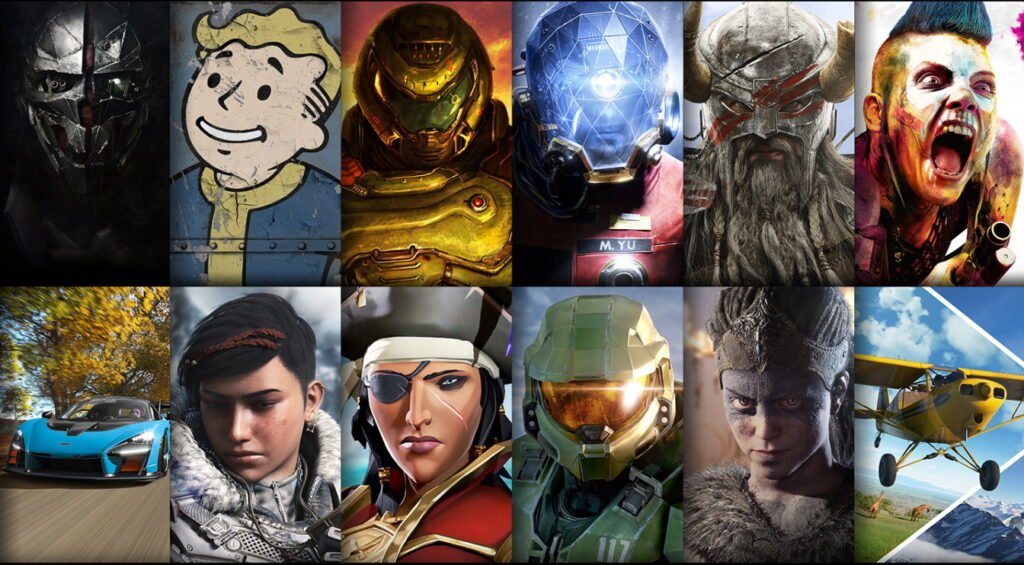
According to the survey reviewed by Windows Central, Xbox is asking players what they would do if certain games were no longer released on PlayStation or Nintendo platforms. The available responses reportedly include playing on an Xbox device they already own, purchasing a new Xbox console, switching to PC, or simply deciding not to play the game at all.
These answers could help Microsoft understand whether exclusivity would encourage more people to invest in its hardware or instead push potential customers away from its games.
For example, a PlayStation owner who wants to play the next major Fallout or The Elder Scrolls release might consider purchasing an Xbox if no PlayStation version were available. Another player might decide that buying an additional console is not worthwhile and choose to skip the game entirely.
Both outcomes would be important for Microsoft’s future strategy. Exclusivity can make a console more attractive to dedicated fans, but restricting a release to fewer platforms can also reduce its potential audience.
Xbox therefore has to balance two competing goals: encouraging players to join its ecosystem and making its games available to as many people as possible.
Fallout, The Elder Scrolls, and Physint Could Be Affected
Some of the most notable franchises mentioned in the survey are Fallout and The Elder Scrolls. Both series have enormous audiences across multiple platforms, making them particularly relevant to any discussion about Microsoft’s publishing strategy.
Under the hypothetical scenario described in the survey, previously released games such as Skyrim and Fallout 4 would remain available on their existing platforms. The question instead concerns future releases, including highly anticipated projects such as The Elder Scrolls VI and Fallout 5.
If Microsoft decided to keep those games exclusive to Xbox and PC, PlayStation players could potentially miss out on two of the biggest role-playing game releases of the coming years.
That would represent a significant change for franchises whose popularity extends well beyond the Xbox community. The Elder Scrolls and Fallout have built their audiences over many years, and their appeal is not limited to any single console manufacturer.
The survey also reportedly mentions Physint, the upcoming espionage action project associated with Hideo Kojima. Its inclusion suggests that Xbox is interested in understanding reactions to exclusivity beyond its own established franchises.
However, the presence of these games in a survey does not confirm that Microsoft has decided to restrict their future releases. The questions are designed to explore hypothetical situations, and the company’s final decisions could be very different from the scenarios presented to participants.
Minecraft Raises an Even Bigger Question
Perhaps the most surprising example in the survey is Minecraft.
Unlike many Xbox-associated franchises, Minecraft has become a truly multiplatform phenomenon. Its audience includes players on consoles, PCs, mobile devices, and numerous other platforms. Its success depends partly on its broad accessibility and the ability of friends to enjoy the game across different devices.
The hypothetical scenario reportedly goes beyond simply preventing future Minecraft releases from appearing on competing consoles. It also raises the possibility that existing versions on other platforms could eventually stop receiving updates.
That would be a much more significant step than limiting a new game to Xbox and PC. Players have invested years in their worlds, communities, and multiplayer experiences, making continued support an important part of the game’s appeal.
Restricting future updates could also create practical problems for players who regularly play together across different platforms. Minecraft’s broad reach has helped it remain relevant for years, so any move that reduced that accessibility would need to be considered carefully.
Still, it is important to distinguish between a survey question and an actual business decision. There is currently no confirmation in the information described that Microsoft intends to withdraw Minecraft support from PlayStation or Nintendo consoles.
Why Call of Duty Is Different

Call of Duty is another major Microsoft-owned franchise, but it is reportedly excluded from this particular exclusivity discussion.
The distinction matters because Microsoft’s acquisition of Activision Blizzard involved commitments intended to preserve the franchise’s availability across competing platforms. Those arrangements place Call of Duty in a different position from other games under the company’s ownership.
As a result, Xbox cannot necessarily approach every franchise with the same level of flexibility when deciding where future releases should appear.
Call of Duty also has a substantial commercial presence across PlayStation, Xbox, and PC. Keeping the series available on multiple platforms allows Microsoft to reach a much larger audience than a console-exclusive release would typically attract.
For now, its situation illustrates that Microsoft’s publishing strategy is not simply a choice between making everything exclusive and releasing every game everywhere. Different franchises have different commercial considerations, contractual obligations, and audience expectations.
Do Upcoming Xbox Exclusives Signal a Bigger Change?
The survey comes at a time when Xbox’s approach to exclusivity continues to attract attention. Microsoft has increasingly released selected games on competing platforms, challenging the traditional idea that console manufacturers should keep their biggest titles within their own hardware ecosystems.
At the same time, upcoming projects such as Gears of War: E-Day and Clockwork Revolution have been presented as Xbox and PC releases, reinforcing the idea that Microsoft may still see value in platform exclusivity for certain games.
These two approaches are not necessarily contradictory. Xbox could continue bringing selected established titles to PlayStation and Nintendo while keeping other projects exclusive to its own ecosystem.
The company might also evaluate exclusivity on a game-by-game basis, considering development costs, audience size, hardware sales, and the long-term value of each franchise.
A major role-playing game could serve as a reason for players to buy an Xbox, while a multiplatform release could generate revenue from a much broader audience. The right decision may differ depending on the game.
The survey is therefore worth watching, but it should not be interpreted as proof that Microsoft is preparing to reverse its entire multiplatform strategy.
What This Means for Xbox Players
Ultimately, the survey appears to be an attempt to measure player behavior before making decisions that could affect some of gaming’s most recognizable franchises.
If players indicate that they would purchase an Xbox to access exclusive releases, Microsoft could see an argument for keeping certain titles within its ecosystem. If most respondents say they would simply skip those games, restricting their availability might look considerably less attractive.
There is also an important difference between what players say they would do in a survey and how they actually behave when a highly anticipated game launches. Hypothetical answers can provide useful insight, but they cannot perfectly predict real purchasing decisions.
For PlayStation and Nintendo owners, the key point is that no confirmed blanket exclusivity policy has been announced as a result of this survey. Fallout 5, The Elder Scrolls VI, Physint, and Minecraft should not automatically be considered Xbox exclusives simply because they appear in hypothetical questions.
For now, Xbox is asking questions rather than announcing a major policy change. Whether the company ultimately chooses broader multiplatform releases or renewed exclusivity will depend on how it weighs hardware sales, software revenue, contractual commitments, and the expectations of its growing player base.
“Microsoft has officially confirmed the next ID@Xbox Showcase for October 20, promising fresh looks and updates across 18 upcoming indie titles. Here is everything you need to know about the event, from expected world premieres to upcoming Xbox Game Pass additions.”