

Assassin’s Creed Games in Chronological Order: Complete Timeline and Play Order
Discover every mainline Assassin's Creed game in chronological order, including Assassin's Creed Shadows. Explore historical settings, protagonists, and the best play order.
Over the years, Ubisoft’s Assassin’s Creed franchise has taken players on an extraordinary journey through history. From Ancient Greece and Egypt to Renaissance Italy, Revolutionary America, and Victorian London, the series has explored some of the most fascinating periods in human history.
At the heart of every adventure is the centuries-old conflict between the Assassins and the Templars. While each game introduces a different historical protagonist and setting, the franchise connects these individual stories through recurring characters, ancient civilizations, mysterious artifacts, and a modern-day storyline.
With more than a dozen mainline entries released over the years, figuring out the correct Assassin’s Creed games in chronological order can be confusing, especially for newcomers. The arrival of Assassin’s Creed Shadows also adds another important chapter to the historical timeline, taking players to feudal Japan.
There are two main ways to experience the franchise: playing the games according to their historical settings or following their original release order. Both approaches have their advantages, depending on whether you want to follow the historical evolution of the Assassin-Templar conflict or experience the series as Ubisoft originally intended.
Should You Play Assassin’s Creed Games in Historical or Release Order?
Before looking at the complete timeline, it is worth understanding the difference between the two available approaches.
Playing the games in historical chronological order allows you to follow the events of the past as they unfold across different centuries. This is particularly interesting if you enjoy the historical settings and want to see how the Assassin Brotherhood and its enemies developed over time.
However, the modern-day storyline does not follow this same chronological structure. Characters such as Desmond Miles and Layla Hassan have their own interconnected narratives, which progress primarily according to the games’ release dates.
For this reason, playing in release order is generally the better option if you want to experience the overarching modern-day narrative without jumping backward and forward between different periods of development.
On the other hand, historical chronological order is an excellent choice if you are primarily interested in the historical adventures themselves.
The following list focuses on the mainline games and their primary historical settings. Some entries also contain flashbacks or sequences set in different periods, but their main stories determine their position here.
Note: The descriptions below contain story details and potential spoilers for several Assassin’s Creed games.
Assassin’s Creed Games in Historical Chronological Order
The following order is based on the main historical events of each game, not its original release date.
1. Assassin’s Creed Odyssey (431–422 BC)

- Historical setting: Ancient Greece
- Historical protagonists: Kassandra or Alexios
- Modern-day protagonist: Layla Hassan
Assassin’s Creed Odyssey takes players further back in history than any other mainline entry. Set during the Peloponnesian War between Athens and Sparta, the game follows either Kassandra or Alexios, descendants of the legendary Spartan king Leonidas I.
Unlike earlier games, Odyssey takes place before the formal establishment of both the Assassin Brotherhood and the Templar Order. Instead, players uncover the secrets of the Cult of Kosmos and explore the influence of the First Civilization through powerful Isu artifacts.
The adventure also features historical figures such as Socrates, Hippocrates, and Plato, alongside mythological creatures including Medusa and the Cyclops. Its extensive RPG mechanics, dialogue choices, and branching storylines represent a major evolution for the franchise.
2. Assassin’s Creed Origins (49–44 BC)
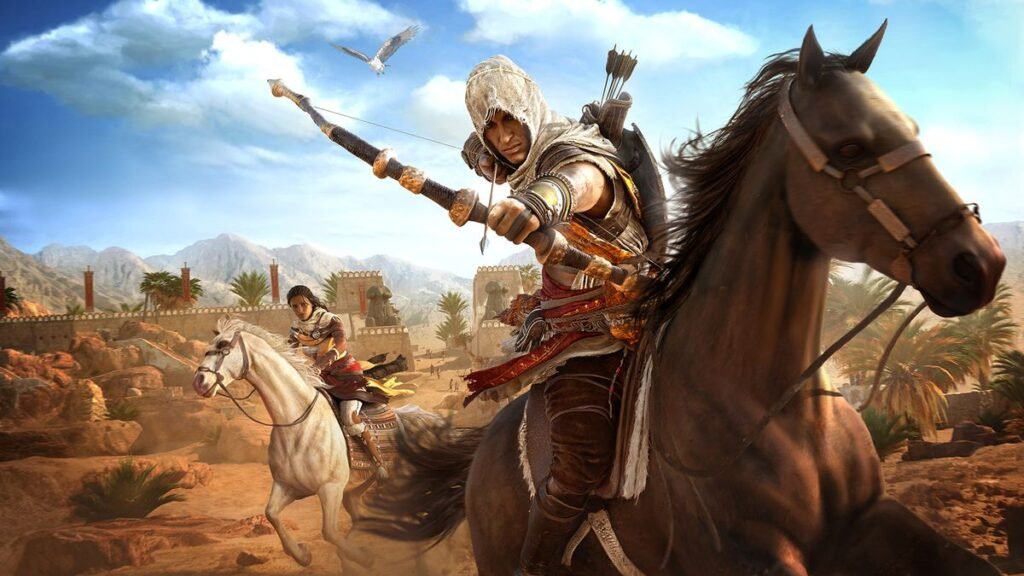
- Historical setting: Ancient Egypt
- Historical protagonist: Bayek of Siwa
- Modern-day protagonist: Layla Hassan
After releasing annual Assassin’s Creed titles for several years, Ubisoft took an additional development year before introducing Assassin’s Creed Origins in 2017. The result was a major reinvention of the franchise, introducing deeper RPG mechanics and a much larger open world.
The story follows Bayek, a Medjay whose personal tragedy leads him into a dangerous conspiracy involving powerful political figures. Set during the reign of Ptolemy XIII and the rise of Cleopatra, the adventure explores the origins of the conflict that eventually gives birth to the Assassin Brotherhood.
One of the game’s most important developments is the introduction of the Hidden Ones, an organization established by Bayek and Aya to fight the Order of the Ancients, the predecessor of the Templar Order.
Origins also introduces Layla Hassan, whose modern-day storyline continues through Odyssey and Valhalla.
3. Assassin’s Creed Mirage (861–870)

- Historical setting: Ninth-century Baghdad
- Historical protagonist: Basim Ibn Ishaq
- Modern-day protagonist: No traditional playable modern-day protagonist
Assassin’s Creed Mirage takes place in ninth-century Baghdad and follows a younger Basim Ibn Ishaq, a character previously introduced in Assassin’s Creed Valhalla.
Unlike the large RPG adventures that preceded it, Mirage returns to the franchise’s stealth-focused roots. Players follow Basim as he progresses from a street thief plagued by mysterious visions into a trained member of the Hidden Ones.
Under the guidance of his mentor Roshan, Basim leaves Baghdad and travels toward the Hidden Ones’ stronghold at Alamut. His journey gradually reveals more about his mysterious past and his connection to the larger Assassin’s Creed mythology.
Mirage also places much greater emphasis on traditional assassination missions, parkour, and stealth than Origins, Odyssey, or Valhalla.
4. Assassin’s Creed Valhalla (872–878)
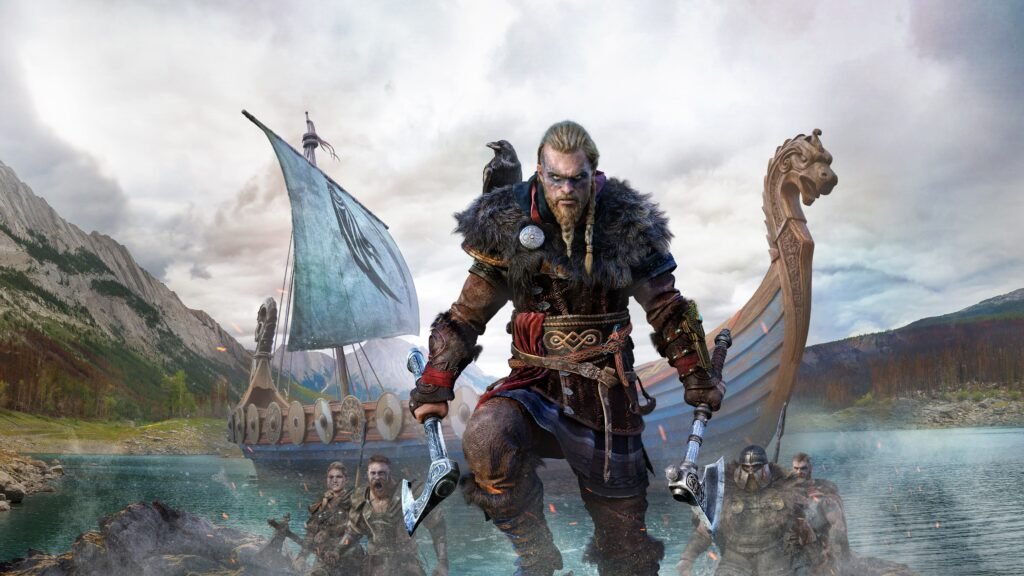
- Historical setting: Ninth-century Norway and England
- Historical protagonist: Eivor Varinsdottir / Varinsson
- Modern-day protagonist: Layla Hassan
Assassin’s Creed Valhalla takes players into the Viking Age, following Eivor and their clan as they leave Norway in search of a better future in England.
The adventure combines Viking raids, political alliances, settlement building, and the ongoing conflict between the Hidden Ones and the Order of the Ancients. Along the way, players encounter historical figures such as King Alfred the Great, Harald Fairhair, and Rollo.
Valhalla also incorporates Norse mythology through its interpretations of Odin, Fenrir, and other legendary figures. These mythological sequences are closely connected to the franchise’s First Civilization lore.
Its modern-day storyline continues Layla Hassan’s journey, connecting the events of the historical adventure to the larger Assassin’s Creed universe.
5. Assassin’s Creed (1191)

- Historical setting: The Holy Land during the Third Crusade
- Historical protagonist: Altaïr Ibn-La’Ahad
- Modern-day protagonist: Desmond Miles
The original Assassin’s Creed introduces the conflict that defines the entire franchise. Set during the Third Crusade in 1191, the game follows Altaïr Ibn-La’Ahad as he attempts to eliminate nine influential Templar targets.
Players explore major cities including Jerusalem, Damascus, and Acre while learning about the Assassin Brotherhood and its ancient enemies.
The game also introduces Desmond Miles, a modern-day character forced to relive his ancestor’s memories through a machine called the Animus. This technology allows users to experience genetic memories stored within their DNA.
Another central element is the Piece of Eden, a powerful artifact created by the First Civilization. These mysterious objects become increasingly important throughout the series.
6. Assassin’s Creed II (1476–1499)

- Historical setting: Renaissance Italy
- Historical protagonist: Ezio Auditore da Firenze
- Modern-day protagonist: Desmond Miles
Assassin’s Creed II introduces Ezio Auditore da Firenze, arguably the most recognizable protagonist in the franchise.
Set across Renaissance Italy, the story begins when Ezio’s family is betrayed and executed. Seeking revenge, he gradually discovers a much larger conspiracy involving the Templars and powerful political figures.
The adventure takes players through Florence, Venice, Forlì, and Rome, featuring historical personalities such as Leonardo da Vinci, Niccolò Machiavelli, and Rodrigo Borgia.
Ezio’s journey is particularly important because it transforms him from an inexperienced young nobleman into one of the most influential Assassins in history.
Meanwhile, Desmond continues working with the modern-day Assassin organization as he searches for answers about the Pieces of Eden.
7. Assassin’s Creed Brotherhood (1499–1507)
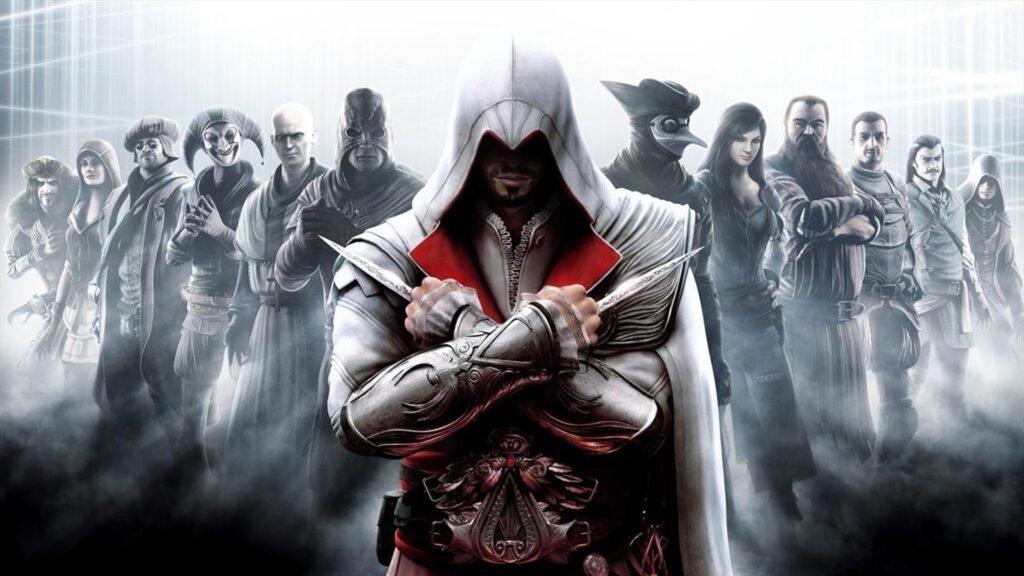
- Historical setting: Renaissance Rome
- Historical protagonist: Ezio Auditore da Firenze
- Modern-day protagonist: Desmond Miles
Brotherhood continues Ezio’s story immediately after the events of Assassin’s Creed II. Following another devastating confrontation with the Borgia family, Ezio travels to Rome to rebuild the Assassin Brotherhood and challenge the Templars’ influence over the city.
For the first time in the series, players can recruit and train other Assassins, sending them on missions and calling upon them during combat.
The modern-day storyline also continues, with Desmond and his companions searching for the Apple of Eden to prevent a catastrophic future.
8. Assassin’s Creed Revelations (1511–1512)

- Historical setting: Constantinople (modern-day Istanbul)
- Historical protagonist: Ezio Auditore da Firenze
- Modern-day protagonist: Desmond Miles
Revelations concludes Ezio’s journey and brings his story closer to that of Altaïr.
Now older and wiser, Ezio travels to Constantinople in search of Altaïr’s legendary library. To unlock it, he must locate several keys hidden throughout the city. Each key reveals memories from Altaïr’s life, allowing players to experience important moments from both protagonists’ stories.
The game’s setting is particularly memorable, featuring Constantinople during the Ottoman Empire and recognizable landmarks such as Hagia Sophia.
In the modern-day storyline, Desmond becomes trapped inside the Animus and must navigate a strange digital environment to recover his consciousness.
9. Assassin’s Creed Shadows (1579–1581)
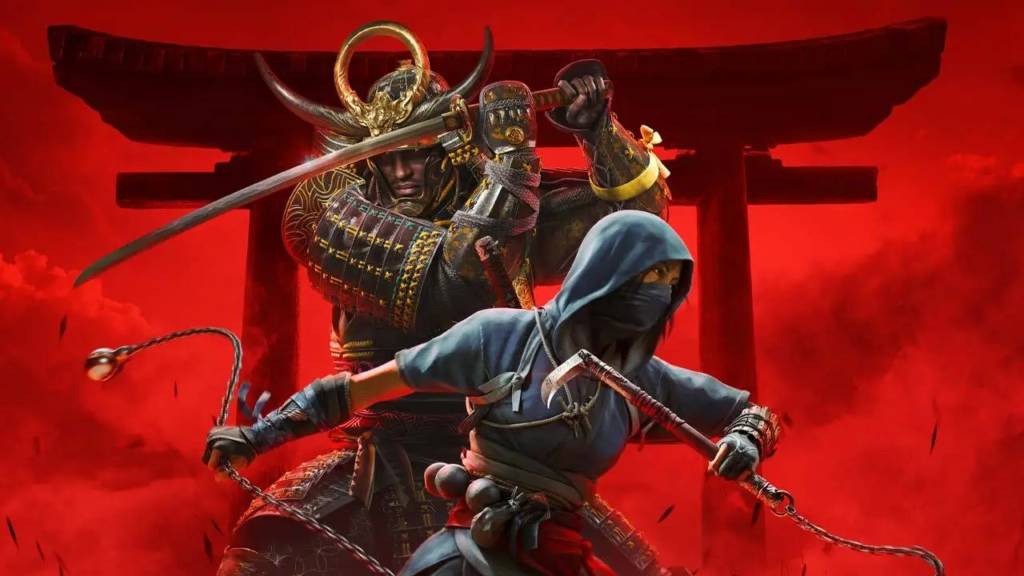
- Historical setting: Feudal Japan during the late Sengoku period
- Historical protagonists: Fujibayashi Naoe and Yasuke
- Modern-day storyline: Animus-related narrative framework
Assassin’s Creed Shadows finally takes the franchise to feudal Japan, a setting fans had requested for years. Beginning in 1579, during the Azuchi-Momoyama period, the game explores a turbulent chapter in Japanese history as powerful warlords fight to unify the country.
For the first time in the main series, players control two protagonists with distinctly different approaches to combat and exploration.
Naoe is a Japanese shinobi who specializes in stealth, parkour, and silent assassinations. Yasuke, inspired by the historical African samurai who served under Oda Nobunaga, offers a more direct combat-focused experience.
Their stories intersect during a period of political upheaval, with historical figures such as Oda Nobunaga and Akechi Mitsuhide playing important roles.
Chronologically, Shadows takes place after Revelations but several centuries before Black Flag. Its position makes it an important addition to the historical timeline, particularly for players interested in the development of the Assassin Brotherhood across different cultures.
10. Assassin’s Creed IV: Black Flag (1715–1722)
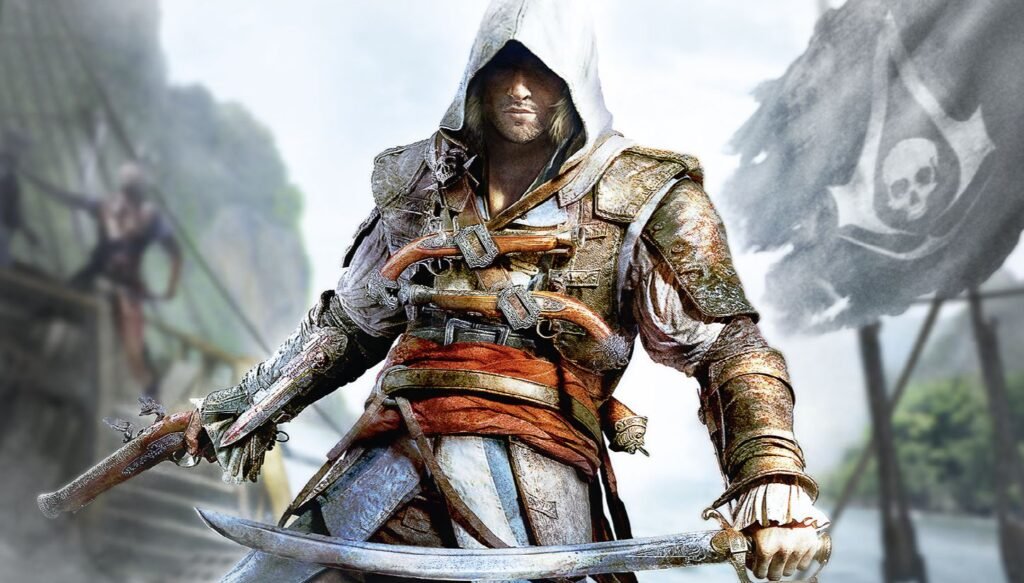
- Historical setting: Caribbean during the Golden Age of Piracy
- Historical protagonist: Edward Kenway
- Modern-day protagonist: Unnamed Abstergo Entertainment employee
Assassin’s Creed IV: Black Flag moves the series into the Golden Age of Piracy, introducing Edward Kenway, a Welsh pirate and the grandfather of Connor Kenway from Assassin’s Creed III.
Edward initially has little interest in the Assassin-Templar conflict. However, after becoming involved in a dangerous conspiracy, he gradually discovers the importance of the ancient organizations and their search for powerful First Civilization technology.
The game features famous historical pirates such as Blackbeard, Benjamin Hornigold, and Mary Read. Its biggest gameplay innovation is naval combat, allowing players to command their own ship, the Jackdaw, and explore the Caribbean.
The modern-day storyline also takes a different direction, placing players in the role of an Abstergo employee investigating genetic memories for a corporate entertainment project.
11. Assassin’s Creed Rogue (1752–1760)
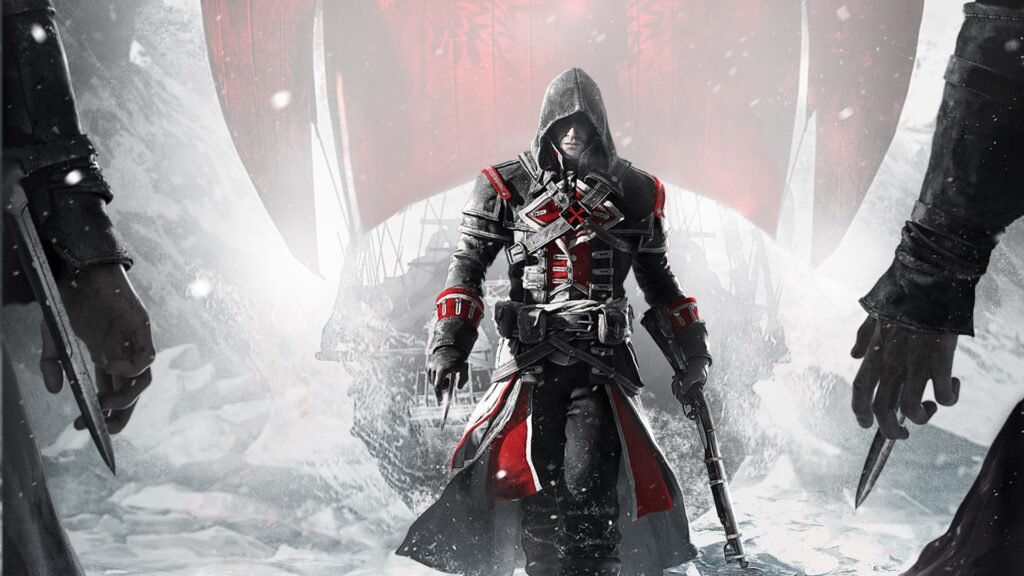
- Historical setting: Northeastern North America and the North Atlantic
- Historical protagonist: Shay Patrick Cormac
- Modern-day protagonist: An unnamed Abstergo employee known as Numbskull
Assassin’s Creed Rogue offers one of the most interesting perspectives in the franchise by allowing players to experience the conflict from the Templars’ side.
The story follows Shay Patrick Cormac, an Irish-American Assassin who gradually loses faith in the Brotherhood after witnessing the devastating consequences of certain missions. Eventually, he abandons the Assassins and joins the Templar Order.
The game also connects several entries in the franchise. Haytham Kenway, Edward Kenway’s son and Connor’s father, plays an important role in the story.
Rogue takes place during the Seven Years’ War and features familiar locations across North America, including snowy environments and the Atlantic coastline.
Its modern-day storyline once again puts players inside Abstergo, where an employee known as Numbskull becomes involved in the Templars’ latest plans.
12. Assassin’s Creed III (1754–1783)
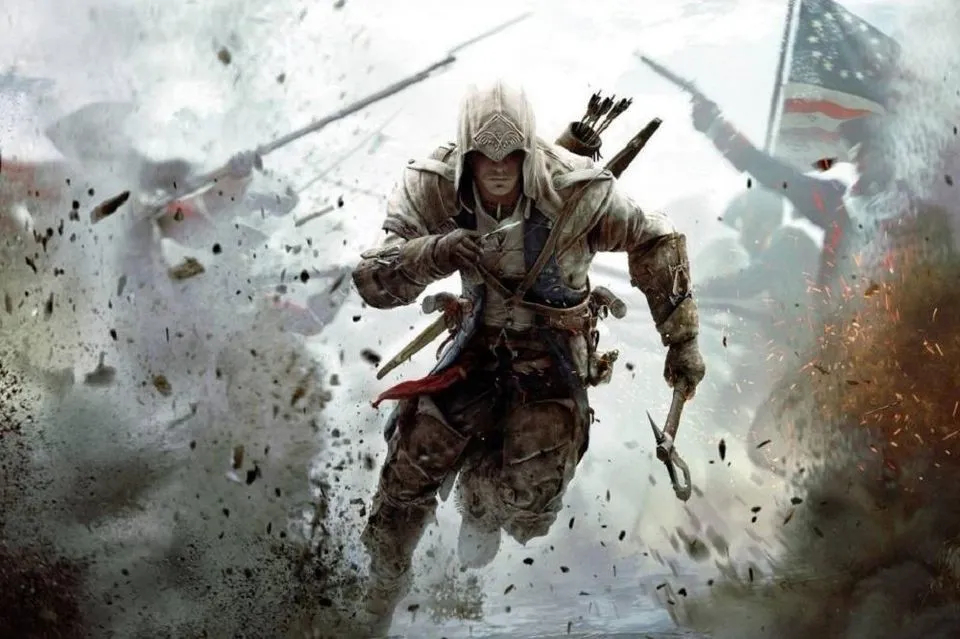
- Historical setting: Colonial America during the American Revolution
- Historical protagonist: Ratonhnhaké:ton (Connor Kenway)
- Modern-day protagonist: Desmond Miles
Assassin’s Creed III begins with a surprising twist, initially placing players in the role of Haytham Kenway before introducing his son, Ratonhnhaké:ton, better known as Connor.
Set during the American Revolution, Connor fights to protect his community while becoming involved in the ongoing conflict between the Assassins and Templars.
The story features several important historical figures, including George Washington, Benjamin Franklin, Samuel Adams, and Charles Lee.
Beyond its historical adventure, Assassin’s Creed III is particularly important because it concludes Desmond Miles’ central storyline. His journey reaches its climax as the modern-day Assassins attempt to prevent a global catastrophe predicted for December 21, 2012.
13. Assassin’s Creed Unity (1789–1794)
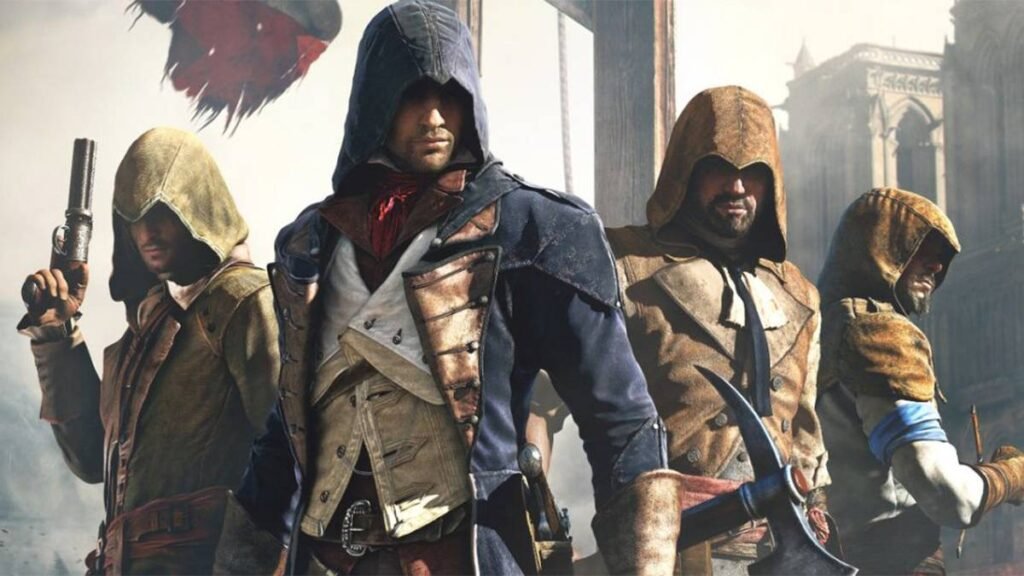
- Historical setting: France during the French Revolution
- Historical protagonist: Arno Dorian
- Modern-day protagonist: An unnamed Helix player
Assassin’s Creed Unity takes players to Paris during one of the most turbulent periods in European history: the French Revolution.
The game follows Arno Dorian, a young Assassin whose personal search for revenge gradually draws him into the wider conflict between the Assassins and Templars.
Paris is the centerpiece of the adventure, with its crowded streets, enormous landmarks, and detailed architecture providing one of the series’ most impressive historical environments.
Historical figures such as Napoleon Bonaparte, King Louis XVI, and the Marquis de Sade also appear throughout the story.
Unity introduces cooperative multiplayer missions and significantly expands the parkour system, allowing players to climb and navigate buildings with greater freedom.
Its modern-day storyline is less prominent than those of earlier entries. Instead of following a traditional protagonist, players experience the story through the Helix entertainment platform.
14. Assassin’s Creed Syndicate (1868)

- Historical setting: Victorian London
- Historical protagonists: Jacob Frye and Evie Frye
- Modern-day protagonist: An unnamed Helix player
Assassin’s Creed Syndicate is the latest mainline game in this historical timeline, taking place in London during the Industrial Revolution.
The story follows twin Assassins Jacob and Evie Frye as they attempt to free London from Templar control. Although both characters share the same overall objective, they have very different personalities and approaches to completing missions.
Jacob prefers direct confrontation, while Evie specializes in stealth and careful planning. This dual-protagonist system allows players to approach different situations according to their preferred playstyle.
The game also introduces several famous historical personalities, including Charles Darwin, Charles Dickens, and Alexander Graham Bell.
One particularly interesting feature is a sequence set during World War I, which takes players beyond the main historical period of the game. However, Syndicate’s central story remains firmly rooted in 1868.
Assassin’s Creed Games in Release Date Order
If you would rather experience the franchise as Ubisoft originally intended, playing the games in release order is the better option. This approach allows you to follow the development of the gameplay mechanics, storytelling, and modern-day narrative without jumping between different historical periods.
Here is the release order of the 14 mainline Assassin’s Creed games:
- Assassin’s Creed (2007)
- Assassin’s Creed II (2009)
- Assassin’s Creed: Brotherhood (2010)
- Assassin’s Creed: Revelations (2011)
- Assassin’s Creed III (2012)
- Assassin’s Creed IV: Black Flag (2013)
- Assassin’s Creed Rogue (2014)
- Assassin’s Creed Unity (2014)
- Assassin’s Creed Syndicate (2015)
- Assassin’s Creed Origins (2017)
- Assassin’s Creed Odyssey (2018)
- Assassin’s Creed Valhalla (2020)
- Assassin’s Creed Mirage (2023)
- Assassin’s Creed Shadows (2025)
Which Assassin’s Creed Game Should You Play First?
If you are new to the franchise, choosing between historical chronological order and release order can make a significant difference to your experience.
My recommendation is to start with the original Assassin’s Creed and follow the release order. The main reason is the modern-day storyline, particularly Desmond Miles’ journey, which connects several early games. Playing these entries in their original order also lets you appreciate how Ubisoft gradually transformed the franchise from a stealth-focused action-adventure series into a much larger RPG experience.
However, if you are primarily interested in historical settings, chronological order offers a fascinating alternative. You can begin with Ancient Greece in Odyssey, explore the origins of the Brotherhood in Origins, travel through medieval Baghdad in Mirage, and eventually reach feudal Japan in Shadows.
It is also worth remembering that some games overlap historically. Rogue and Assassin’s Creed III, for example, cover parts of the same period, even though their stories follow different characters and events.
Ultimately, there is no wrong way to experience the franchise. Whether you prefer Ezio’s Renaissance adventures, Edward Kenway’s pirate life, Eivor’s Viking journey, or Naoe and Yasuke’s adventures in Japan, each game offers a different perspective on the centuries-long Assassin-Templar conflict.
If you want to experience the complete modern-day storyline, choose release order. If you want to explore the history of the Assassin’s Creed universe, choose chronological order.
“Celebrating four decades of whip-snapping action and gothic horror, we trace the full evolution of Castlevania—from its NES debut to shaping an entire genre with Symphony of the Night and beyond.”