
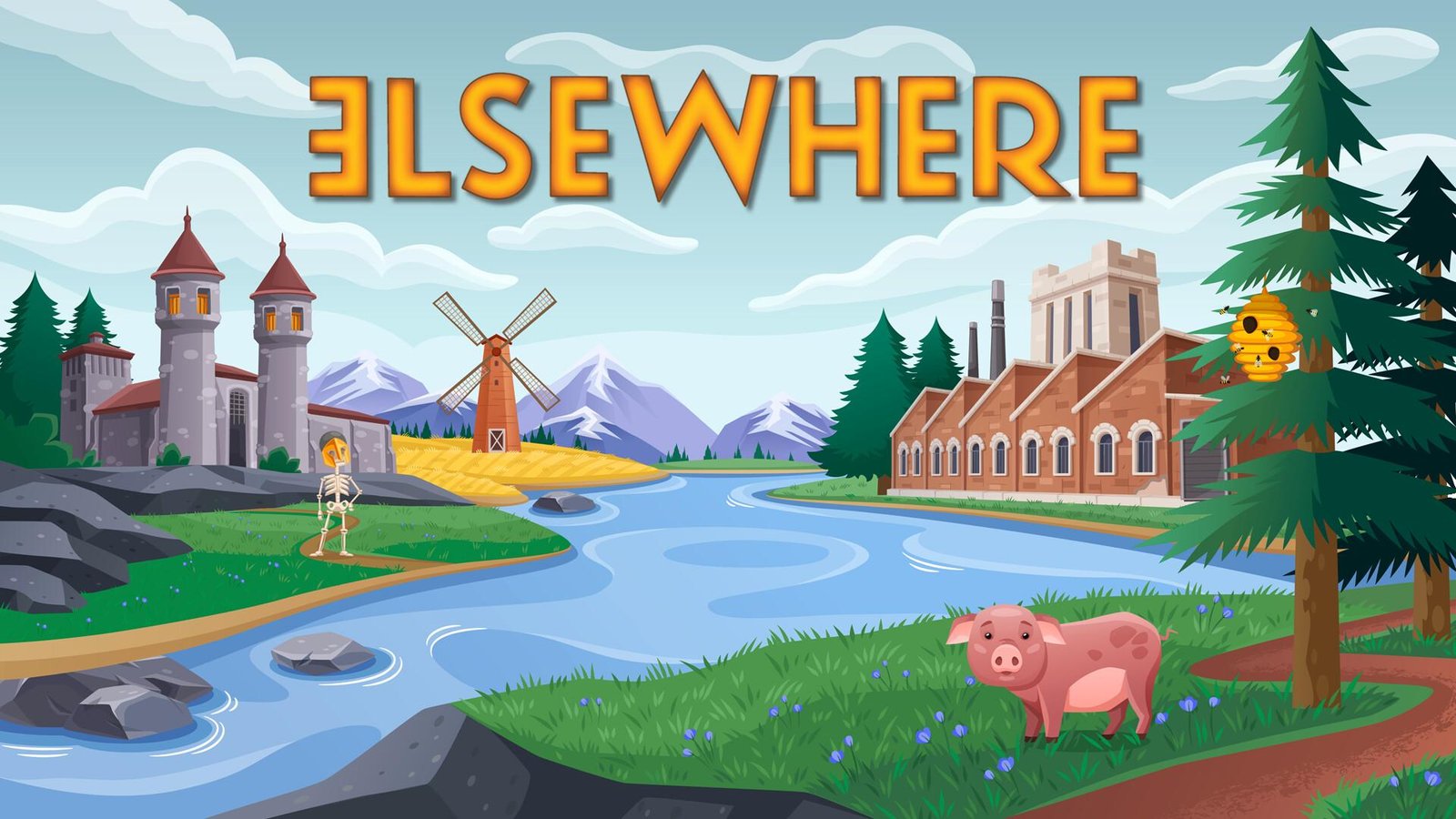
Elsewhere Review – A Massive Sandbox Adventure Inspired by Classic Minecraft Modpacks
Explore our Elsewhere review, covering its massive sandbox world, crafting, survival, magic, automation, quests, and technological progression.
Sandbox games have always offered something special: the freedom to explore, experiment, build, and create your own adventures without constantly being pushed toward a predetermined objective. While Minecraft remains the genre’s most recognizable name, countless games have attempted to expand on its formula by introducing deeper crafting systems, more complex progression, and additional mechanics.
Elsewhere is one such project, but it aims to go considerably further than simply offering another block-based survival experience. Developed by a solo creator named Sergio, the game combines exploration, resource management, combat, magic, alchemy, technological advancement, and extensive automation into one enormous sandbox adventure.
Inspired by classic Minecraft modpacks, Elsewhere brings together thousands of recipes, more than 8,000 blocks, hundreds of quests, and a procedurally generated world filled with different environments, creatures, structures, and secrets.
What makes the project particularly interesting is its progression system. Players can begin with basic survival equipment and eventually work their way toward advanced industrial machinery, nuclear fusion, and particle accelerators. There is also a magical side to the experience, meaning technological development is only one of several paths worth exploring.
Rather than focusing on a single gameplay loop, Elsewhere attempts to deliver an entire collection of interconnected systems. This ambition makes it an interesting option for players who enjoy games that reward curiosity, creativity, and long-term experimentation.
A Sandbox World With Almost Endless Possibilities
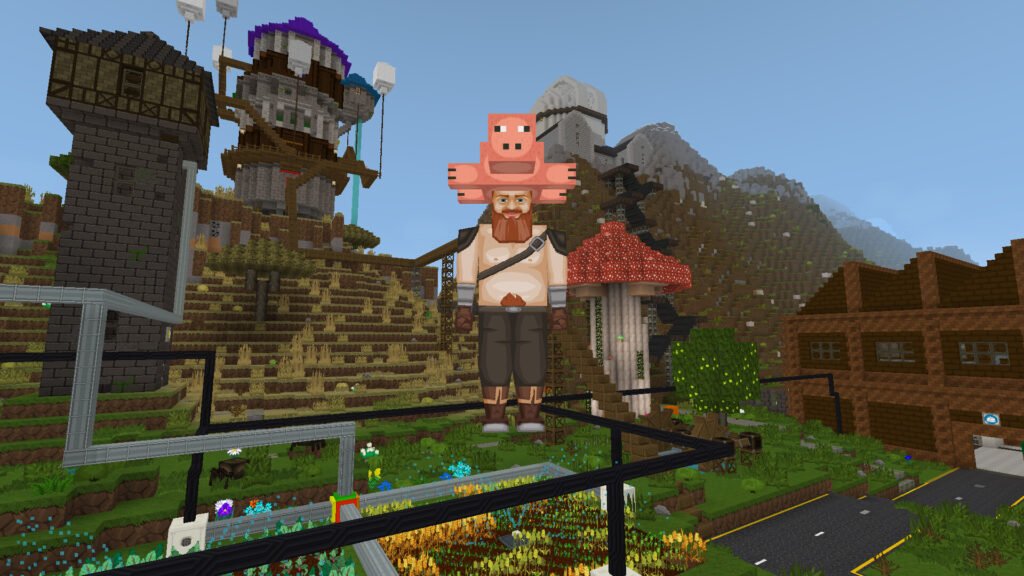
The foundation of Elsewhere is its procedurally generated world. Players can explore a large environment containing more than 70 biomes and sub-biomes, with landscapes ranging from forests and oceans to cliffs, ravines, lakes, and islands.
World generation plays an important role in keeping exploration interesting. Instead of simply moving between familiar environments, players can discover different geographical features, resource deposits, underground caverns, and naturally generated structures.
There is plenty to interact with, too. The world includes a wide variety of plants, trees, flowers, mushrooms, crops, fruits, berries, and sea life. Animals can be raised through animal husbandry, while monsters introduce additional dangers to exploration.
The environments also feature a day-and-night cycle and changing weather conditions, helping create a world that feels more dynamic than a collection of static building areas.
Players are free to place and remove blocks, construct their own settlements, build enormous castles, and reshape the surrounding environment. With more than 8,000 blocks available, the creative possibilities are extensive.
Another interesting addition is the inclusion of different world types. Players can experiment with environments such as Sky Islands and Evil Wasteland, offering alternatives to the standard procedural world.
For anyone who enjoys spending hours creating their own structures, designing settlements, and exploring unfamiliar environments, this level of freedom is one of Elsewhere’s biggest attractions.
Crafting and Progression: From Primitive Tools to Advanced Technology
Crafting is arguably the most important part of Elsewhere, and it is also where the game’s ambition becomes particularly clear. Instead of limiting players to a relatively small collection of recipes, the game offers more than 7,000 crafting recipes, creating an extensive progression system that can take a considerable amount of time to understand and master.
The journey begins with basic tools and simple resource gathering. As players collect materials, construct workstations, and unlock new recipes, they gradually gain access to more advanced technologies. What starts as a traditional survival experience can eventually develop into a complex industrial operation involving automated production lines and sophisticated machinery.
The technological progression is especially impressive on paper. Players can advance from stone tools and water wheels to nuclear fusion systems and particle accelerators. This creates a strong sense of long-term progression, as new technologies open up additional possibilities for resource processing and base development.
Automation is another major part of the experience. Players can construct machines, organize storage systems, process materials, and connect different production stages to create increasingly complicated factories.
The developer even mentions building a fully automated Jaffa Factory as an example of the challenges players can pursue. This is particularly appealing to fans of classic Minecraft modpacks, where designing efficient production systems can become just as entertaining as exploring the world itself.
However, the sheer number of recipes and interconnected systems also suggests that Elsewhere will require patience. Players looking for a straightforward crafting experience may find its progression overwhelming, but those who enjoy learning complicated systems should have plenty to keep them occupied.
Magic, Combat, and Dungeon Exploration
Although technology is a major part of Elsewhere, the game does not limit progression to machinery and industrial development. Magic, alchemy, and exploration introduce another layer of possibilities, giving players additional ways to approach the world.
Players can discover ancient ruins and temples, explore dangerous underground locations, and investigate enormous procedurally generated castles and dungeons. These structures are not simply decorative locations. They contain monsters, traps, valuable resources, bosses, and other rewards worth discovering.
Combat provides an alternative to spending time gathering resources and constructing machines. Players can fight different types of enemies using weapons, armor, magical artifacts, and other equipment. There are also craftable minions, which add another interesting element to the game’s combat systems.
Alchemy and potion brewing further expand the available options. Combined with magic and transmutation, these mechanics give players opportunities to experiment with different approaches to progression.
The inclusion of powerful bosses and locations filled with valuable loot also provides reasons to improve equipment and explore more dangerous areas. This helps balance the game’s creative side with a more traditional adventure experience.
For players who prefer discovering hidden locations and fighting challenging enemies over spending hours managing production lines, these systems should provide an appealing alternative.
Quests, Characters, and Freedom of Choice
One potential problem with extremely large sandbox games is that players can sometimes struggle to find a clear direction. Elsewhere attempts to address this through an extensive quest system featuring approximately 400 quests.
These objectives introduce different activities, encourage exploration, and help players discover mechanics they might otherwise overlook. Importantly, the quest system does not force players to follow a strict linear progression.
You can complete objectives in your preferred order, ignore quests entirely, or spend your time pursuing personal projects. If you would rather build an enormous factory than follow an NPC’s instructions, the game gives you that freedom.
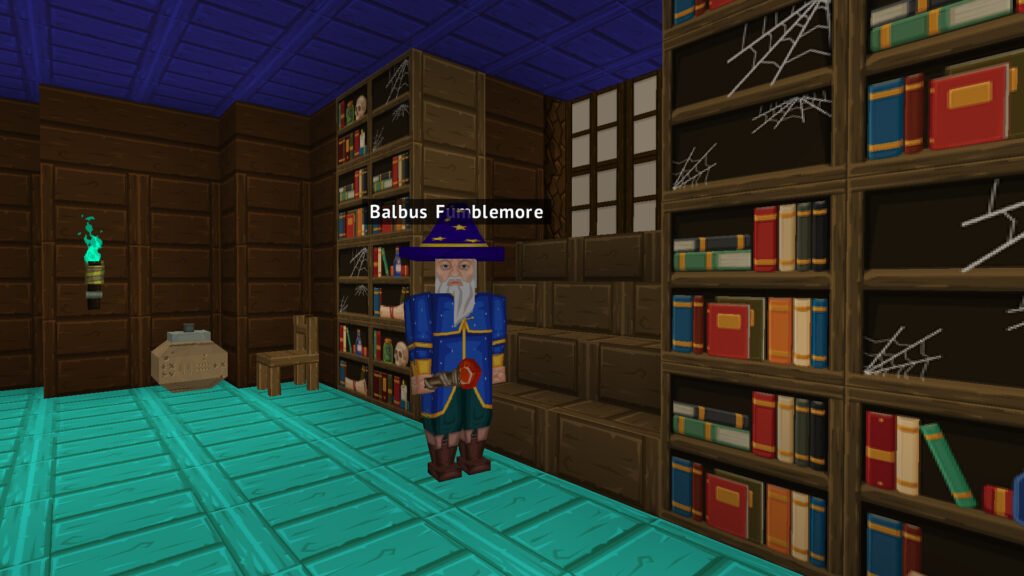
Elsewhere also features recognizable characters such as Templar Adaephon, Fumblemore, and Professor Grizwold. These characters provide unique tasks and help give the world a little more personality.
The combination of quests, NPCs, and unrestricted sandbox gameplay is a sensible approach. Players who appreciate structured objectives can use quests as a guide, while those who prefer complete creative freedom can simply explore and experiment.
Building Tools, Customization, and Additional Features
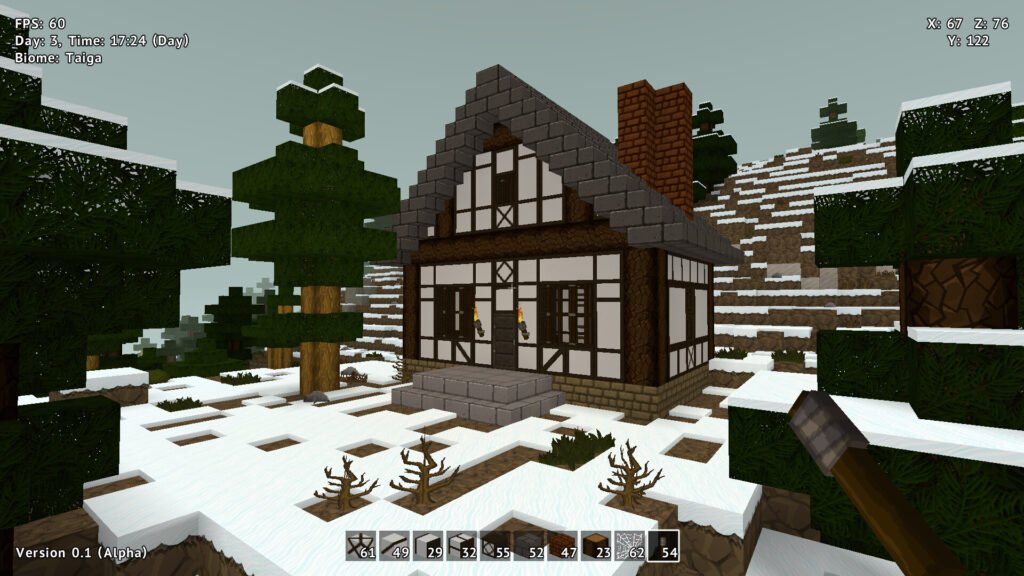
Building is another area where Elsewhere attempts to distinguish itself from traditional survival games. Alongside its enormous block selection, it includes pre-built bases and building templates that make constructing larger structures more accessible.
This is a particularly useful addition for players who enjoy designing settlements but do not necessarily want to place every single block manually.
Character creation and premade skins also provide customization options, allowing players to personalize their appearance. Different world types, decorative objects, and interactive elements add further variety.
One surprisingly fun detail is the inclusion of arcade machines with playable mini-games. These small additions might not be essential to the main experience, but they help make the world feel like more than just a collection of crafting stations and resource deposits.
Other useful features include:
- A minimap and waypoint system for navigation.
- World-editing tools for modifying environments.
- Farming, cooking, and animal husbandry.
- Backpacks, jetpacks, weapons, armor, and explosives.
- Different environmental conditions and weather systems.
- LAN multiplayer support.
- Naturally generated structures and large boss-filled dungeons.
There is also a free-to-play modification called YogLabs: Testing Initiative, inspired by the YogLabs series. The developer confirms that Yogscast-related content is included with permission, which is a nice extra for fans familiar with that community.
Development and Future Potential
Perhaps one of the most interesting aspects of Elsewhere is its development history. According to its creator, Sergio, development began in 2012, and he has been working on the project nearly full-time since late 2018.
The fact that one developer has handled the game’s programming, while creating some of the artwork with help from artist friends, makes the project’s scope particularly noteworthy.
Elsewhere is clearly a passion project inspired by the creativity of the Minecraft modding community. Rather than simply reproducing familiar mechanics, it attempts to bring together many of the ideas that made classic modpacks so enjoyable in a single experience.
However, the developer has also acknowledged that the game is enormous and that additional features are still planned.
Some of the announced future improvements include better multiplayer optimization, Steam multiplayer support, native Linux support, and expanded modding capabilities.
These additions could make the experience even more appealing, particularly for players who enjoy sharing complicated factory builds and large-scale adventures with friends.
It is worth keeping in mind that these are planned features rather than confirmed current capabilities. Anyone primarily interested in online multiplayer should therefore check the latest Steam information before purchasing.
Elsewhere is an ambitious sandbox crafting game that clearly understands the appeal of classic Minecraft modpacks. Its biggest strength is the sheer variety of activities it brings together. Players can explore procedurally generated environments, build enormous structures, fight monsters, discover ancient ruins, experiment with magic, and gradually develop increasingly sophisticated industrial systems.
The progression from basic survival equipment to advanced technologies such as nuclear fusion and particle accelerators is particularly appealing. Combined with more than 8,000 blocks, over 7,000 recipes, and approximately 400 quests, the game offers an enormous amount of content to discover.
Naturally, such an ambitious design comes with potential drawbacks. The number of interconnected systems could make the experience intimidating for newcomers, and players who prefer more focused adventures might struggle with its open-ended structure. Its planned multiplayer improvements and expanded modding support also suggest that there is still room for development.
Nevertheless, Elsewhere looks like a promising choice for anyone who enjoys complex crafting systems, automation, exploration, and long-term progression.
“You can access the Elsewhere Steam store page here.”
“Get the full breakdown on Cleanup on Aisle 3 in our complete review, covering key gameplay mechanics, feature highlights, and the official release date details.”