The Witcher 3 Remastered: CDPR Explains the Push for Modern Gameplay
CD Projekt Red's Jakub Kutrzuba reveals why The Witcher 3 Remastered is overhauling animations and combat to feel like a modern 2027 RPG release.
The recent Gamescom announcement of The Witcher 3 Remastered caught the gaming community completely by surprise. While CD Projekt Red (CDPR) is renowned for supporting its massive role-playing games long after their initial launch, the sheer scale of the improvements packed into this upcoming release was unexpected. Making the announcement even sweeter is the confirmation that this substantial overhaul will be provided as a completely free upgrade for all existing owners of the game. However, the revelation left many fans asking a very valid question: why re-release the game again?
The developer has already detailed a massive list of additions, visual tweaks, and mechanical adjustments, but the timing is curious. An enhanced, next-generation version of the acclaimed RPG—The Witcher 3 Complete Edition—already launched for the PlayStation 5 and Xbox Series X|S back in late 2022. That version introduced ray tracing, heavily improved textures, and a host of community-created mods directly integrated into the base code. To understand this new, even more ambitious remaster, one has to look at the broader roadmap for the franchise.
According to CD Projekt Red executive producer Jakub Kutrzuba, this massive undertaking is a necessary step to bring the entire foundational experience up to modern, current-generation standards. This overhaul is not just about nostalgia; it serves as direct groundwork and technical preparation for the highly anticipated Songs of the Past expansion, as well as the eventual release of The Witcher 4.
Bridging the Gap for Songs of the Past
For many veteran players, the 2022 Complete Edition of The Witcher 3 still holds up incredibly well. While its combat and movement systems occasionally show signs of age—often affectionately referred to as “jank” by the community—these minor friction points are rarely enough to detract from what is widely considered one of the most genre-defining adventures in modern gaming history. The narrative depth, world-building, and character interactions remain best-in-class.
However, with the massive Songs of the Past expansion currently scheduled to release in 2027, the developmental context changes significantly. By the time this new expansion drops, it will have been roughly 12 years since The Witcher 3: Wild Hunt made its original debut. Recognizing this massive gap in time, CDPR clearly sees this remaster as an essential opportunity to smooth over the base game’s rougher edges, ensuring that returning veterans and brand-new players alike experience a cohesive, modernized journey.
“We are touching these aspects of the game which weren’t touched since we launched it,” Kutrzuba explained in a recent interview with PC Gamer. “I’m talking about the animation. I’m talking about the gameplay. I’m talking about the quality of life, how you actually play the game.”
Kutrzuba went on to stress that the development team deeply wants The Witcher 3 to “shine again” on modern hardware. He acknowledged that while the storytelling remains timeless, some mechanical aspects of the RPG simply haven’t aged perfectly over the last decade. For players accustomed to the ultra-fluid mechanics of contemporary action titles, the original 2015 framework could feel like a sticking point.
A Complete Mechanical Overhaul
To ensure the game feels fresh, the team set a distinct internal benchmark. “We wanted to make it comparable with any other game which is launching these days,” Kutrzuba stated. This means moving beyond simple texture upscaling or lighting enhancements, venturing deep into the game’s core kinetic systems.
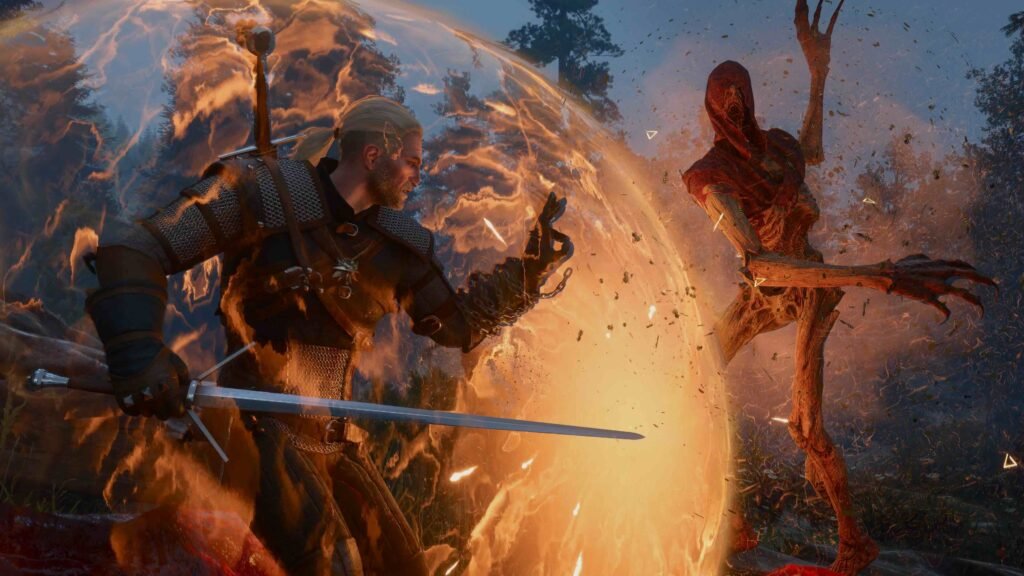
As Kutrzuba outlined, The Witcher 3 Remastered makes several fundamental tweaks to the generational title to achieve this ambitious parity with modern releases. At the very top of the list are drastically more fluid traversal animations and significantly tighter, highly responsive attack mechanics during combat. Geralt’s movement, which was previously criticized for feeling overly heavy or cumbersome in tight spaces, has been rebuilt to offer immediate, snappy feedback.
Combat encounters, from battling standard drowners to tackling massive griffins, will benefit from newly refined hitboxes, improved parrying windows, and smoother transitional frames between dodges and strikes. The goal is to eliminate any mechanical barrier between the player’s input and the on-screen action, creating a flow state that rivals the best action-RPGs on the market today.
The impact of these core foundational changes is apparently so profound that it effectively ruins the original 2015 experience for anyone who tries it. “It’s so easy to get used to these new improvements that it’s hard to go back,” Kutrzuba claimed, highlighting just how transformative this upcoming update will be for the legendary title.
“Crushing box office and critical expectations, Zach Cregger’s Resident Evil is earning near-universal acclaim as a terrifying, high-octane triumph. Read our breakdown of why this reboot finally gets it right.”